From Gas to Green: Rochester Family's Journey to an All-Electric Home
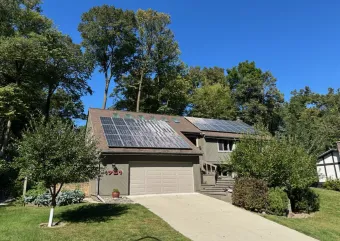
Rick Silbert and his family have spent the last few years upgrading their 1976 home to use electric technologies instead of traditional gas ones. We spoke to him about the
Home Details
- Built: 1976
- Size: 2,800 square feet
- Location: Rochester, Minnesota
- Utility:
- Electric: Rochester Public Utilities
The Silbert Family's Story
In a historic southwest Rochester neighborhood, the Silbert family’s two-story house looks much like surrounding homes, although the two solar arrays visible from the exterior hint at a home that is more than ordinary. Behind its unassuming exterior lies an inspiring story of a family steadily transforming their 1976 home into a model of modern, sustainable living.
For the Rochester family, transitioning their home to use more electric technologies began with a simple motivation to create a living space that is better for the planet and their pocketbook. “We were principally motivated by a desire to have a more sustainable home that was better for the climate,” Rick Silbert shared. “We chose to do so in ways that would have positive long-term economic payback.”
The Silberts started their electrification journey by installing solar to power their home. The family installed two solar arrays, including a 7.2 kW array in 2021 and another 6.4 kW array in 2025. Together, these arrays now generate enough energy to match their annual usage.
“It feels like we’re getting closer to self-sufficiency,” Rick noted. “Ideally, we’d pair it with battery storage someday, though Minnesota winters make full off-grid living tough.”
Their solar panels not only power their home but also feed surplus energy back to the grid through Rochester Public Utilities’ net metering program, which helps balance energy costs and supports community-wide sustainability goals.
The family’s next step into home electrification came in 2024, when they air sealed and insulated their home. Improving the home’s weatherization was an essential precursor to home electrification. At the same time, they upgraded their electrical panel and replaced their old gas water heater with an AO Smith 66-gallon heat pump water heater. The swap from a gas water heater to a heat pump water heater was smooth, and the new system was efficient, quiet, and provided plenty of hot water for their household of two adults, two kids, and two cats.
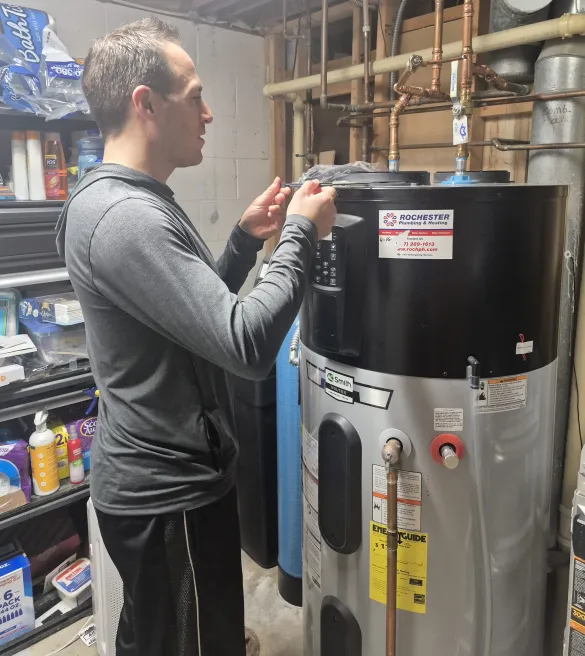
“It’s been seamless. We’ve never run out of hot water. The utility room is a little cooler now, but not in a bothersome way.” The project came with attractive tax credits and rebates, making it a straightforward and easy upgrade to make.
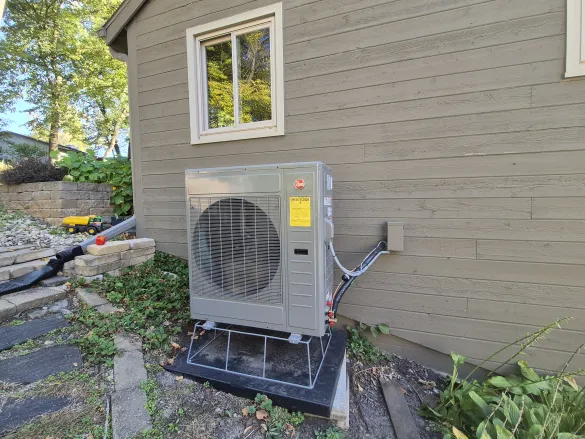
Encouraged by this success, they took the next step in their electrification journey in 2025 and replaced their 20-year-old gas furnace with a Rheem 3-ton air source heat pump. The new ducted system, paired with a 10-kW resistance heat strip for secondary heating, marked their official break from natural gas.
“We switched to an air-source heat pump to get off gas entirely. It’s quieter, requires less maintenance, and makes sense economically — especially paired with solar.” Although the system was only recently installed in September 2025, they are already optimistic about the comfort and control it will bring.
Not every upgrade went smoothly. Upgrading their electrical panel in 2024 from 150 amps to 200 amps turned out to be one of the toughest hurdles. “We needed new line capacity, which meant digging a trench from the boulevard to the back of the house,” Rick recalled. “Unfortunately, there was solid rock just below the ground, so we had to bring in an excavator. It even affected our neighbor’s landscaping.” Despite the obstacles, they see the upgrade as a necessary investment for their all-electric future.
“Electrifying has allowed us to have more control over our energy usage. Especially now that we can pair it with solar and smart time-of-use billing.” Motivated by reducing their climate impact and being a more energy efficient household, their family home is now an inspiring example of how home electrification can be a path to more comfort, control, and peace of mind in a home powered by clean energy.
Equipment Details
- Air Sealing and Insulation
- Blown-in and spray foam insulation added to attic
- Electrical Panel Upgrade
- 200 Amp capacity panel installed
- Air Source Heat Pump
- Size: 3-ton
- Brand: Rheem
- Model: Endeavor Prestige
- Secondary Heating and Air Handler
- Style and capacity: 10 kW resistance heat strip with variable speed air handler
- Brand: Rheem
- Model: Endeavor
- Heat Pump Water Heater
- Size: 66 gallons
- Brand: AO Smith
- Solar Panels
- 13.6 kW system across two solar arrays
- Transportation
- Charging for electric vehicles
- Two electric vehicles
- Two e-bikes with trailers
Answer Your Electrification Questions
Rick and his family chose to electrify their home primarily for climate and sustainability reasons, but made decisions based on long-term economic payback, too. The result was a fully electrified home that still meets the family's needs. If you’re interested in electrification but aren’t sure where to start, consider getting your own home energy audit for tailored guidance on how to make the switch.