Save energy, save money, stay cool
In Minnesota, heating and cooling account for over 70% of the annual energy use of a typical home. By upgrading to a higher efficiency heating and cooling system, you can save on energy use and significantly cut your home’s carbon emissions.
Heat Pump FAQs
If your air conditioner (AC) is 15 years old or older, it’s likely nearing the end of its useful life. As units age, repairs tend to become more frequent and expensive. They also tend to become less efficient, costing more money to run. Why wait for an expensive repair or emergency replacement when you could be investing in new equipment now to save in the long term?
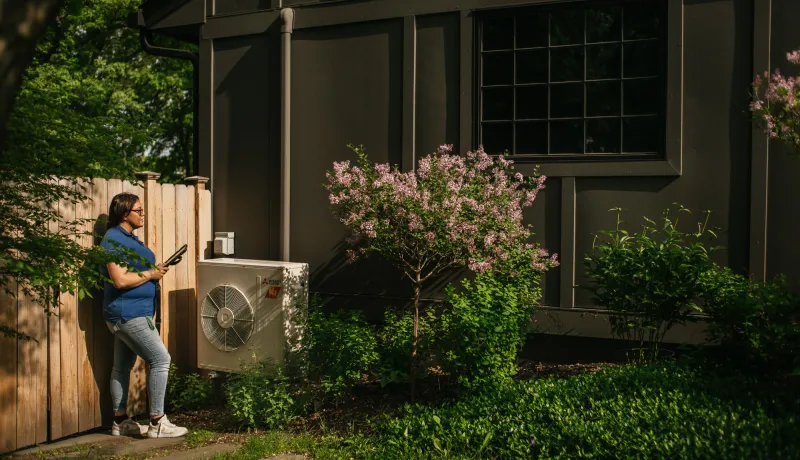
An air source heat pump (ASHP), sometimes called a heat pump, can fully replace your central AC and provide heating to your home. Traditional ACs work by moving heat from inside to outside to keep your house cool. An ASHP works similarly, moving heat out of your home to keep it cool in the summer. However, an ASHP can also keep you warm in the winter by moving heat into your home — like a two-way AC.
Since ASHPs move heat rather than generating it, they're far more efficient than traditional heating and cooling systems. They also use electricity, making them a great choice for lowering your carbon emissions.
Partially, but not entirely. In Minnesota, homes with an ASHP are required to have a supplementary heating source to maintain comfort on the coldest winter days. The supplementary heating source can be a gas system (like a gas furnace) or an electric system, depending on your preferences.
ASHPs are very efficient air conditioner and can fully replace your current system. During the fall, winter, and spring, an ASHP can provide most of the heating, which may extend the life of your furnace. ASHPs are also known for providing more consistent heating and cooling, which can help if you have comfort issues at home.
For most people, the combination of energy efficiency, bill savings, and comfort make an ASHP a worthwhile upgrade.
Typically, modern furnaces are compatible with ASHPs. Compatibility will depend on several factors, including the brand and model of both units. An HVAC professional familiar with ASHPs can assess your current system and provide you with options. If your furnace is the same age as your AC, we’d recommend replacing them together.
The upfront cost of an ASHP is typically higher than a traditional AC, though the exact price can vary based on your home needs, the contractor, and the equipment. Financial incentives are available for ASHPs, which can bring down the installation cost. In some cases, incentives make an ASHP more affordable than an AC.
Long term, an ASHP could help you save on energy bills, depending on your current HVAC setup, heating source, and your utility rates. For example, Xcel Energy offers a special rate for customers who primarily heat their homes with electricity. The discounted rate applies to all electricity usage during the heating season, which could add up to substantial savings.
Visit the Minnesota Air Source Heat Pump Collaborative website for step-buy-step guidance on choosing and installing an ASHP that’s right for your home.
Read real stories about the experiences of Minnesotans who have installed ASHPs in their own homes.
Find more resources, including ways to contact an Electrify Everything MN Advisor for free, no-pressure guidance, below.